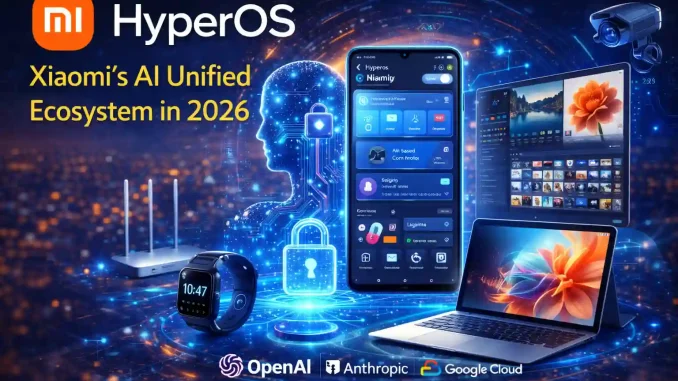
Xiaomi, one of the world’s leading smartphone manufacturers, has taken a major step forward with the launch of HyperOS, a next-generation operating system designed to unify devices across its ecosystem while delivering faster performance and enhanced security. The announcement, made in early 2026, signals Xiaomi’s ambition to compete with other major tech ecosystems by offering a seamless, cross-device software experience.
HyperOS is intended to replace MIUI as Xiaomi’s core software platform, integrating Xiaomi phones, tablets, smart home devices, wearables, and PCs under one operating framework. With a growing ecosystem of connected devices, Xiaomi aims to simplify device management and create a more cohesive user experience.
Unified Ecosystem Across Devices
HyperOS introduces a single operating environment for Xiaomi’s wide-ranging devices. Users can expect better continuity between phones, laptops, tablets, smart TVs, and IoT devices. For example, a notification received on a smartphone can be directly mirrored on a tablet or PC, and app sessions can seamlessly transfer across devices.
The operating system supports cross-device app deployment, meaning developers can design apps once and make them available on multiple Xiaomi devices without additional coding. This approach reduces fragmentation and improves overall system stability.
Xiaomi’s official statements emphasize that HyperOS is designed for speed and efficiency, using advanced memory management and optimized system processes to ensure smoother performance even on older hardware. Users can expect faster app launches, reduced system lag, and improved battery life.
Enhanced AI and Personalization Features
HyperOS incorporates artificial intelligence features that enhance usability and personalization. The system uses machine learning to adapt to user habits, providing predictive app suggestions, intelligent notifications, and adaptive resource allocation. Xiaomi claims that these AI enhancements can increase system efficiency by up to 20 percent compared to MIUI.
The OS also supports AI-based camera optimization, device management, and smart home controls, allowing users to control lighting, security cameras, and other connected devices directly from the system interface. Personal assistants have been integrated with voice commands and natural language processing to make interaction faster and more intuitive.
Security and Privacy Improvements
Xiaomi has made privacy and security a core focus of HyperOS. The OS features enhanced app permissions, system-level encryption for data storage, and stricter controls over app access to sensitive information such as location, microphone, and camera.
The company introduced Privacy Dashboard, a centralized interface for users to monitor and manage data access, app permissions, and security alerts. Xiaomi emphasized that HyperOS will receive regular security updates to address vulnerabilities and protect against malware.
Optimized Performance for Gaming and Multimedia
Xiaomi is positioning HyperOS as an OS capable of supporting high-performance gaming and multimedia applications. HyperOS leverages GPU and CPU optimization, low-latency processing, and adaptive refresh rate management for smoother graphics performance.
In addition, HyperOS supports Ultra HD streaming, AI-based video enhancements, and low-latency audio synchronization for a superior entertainment experience. These features target the growing segment of mobile gamers and multimedia consumers in India and globally.
Rollout and Compatibility
Xiaomi confirmed that HyperOS will gradually roll out across flagship and mid-range devices, beginning with the Xiaomi 14 series and later extending to older models through updates. The company plans to fully replace MIUI on future devices, streamlining software development and maintenance.
The OS is compatible with existing Android apps while offering proprietary features optimized for Xiaomi hardware. Developers can leverage HyperOS SDKs to create optimized applications, while existing apps continue to function without modification.
Industry Response and Market Position
Analysts view HyperOS as a strategic move to strengthen Xiaomi’s ecosystem amid intense competition from Apple, Samsung, and Google. The unified approach allows Xiaomi to retain users within its ecosystem while offering advanced AI-driven features that rival premium devices.
Consumer response has been positive, particularly among early adopters and tech enthusiasts. Xiaomi’s stock analysts note that HyperOS may increase device engagement, enhance brand loyalty, and improve long-term monetization opportunities through app services and Xiaomi’s Mi Store ecosystem.
Challenges Ahead
Despite the advantages, Xiaomi faces challenges in convincing third-party developers to adopt HyperOS features for broader app optimization. Competing ecosystems like iOS and Android remain dominant, and Xiaomi must ensure compatibility and stability to gain widespread acceptance.
Xiaomi has committed to collaboration with developers, providing tools, documentation, and incentives to foster an active app ecosystem for HyperOS. The company also plans to hold developer conferences to showcase HyperOS capabilities and encourage innovation.
Looking Forward
With HyperOS, Xiaomi aims to deliver a seamless, secure, and high-performance experience across its devices. By focusing on AI integration, privacy, cross-device functionality, and developer engagement, the company hopes to strengthen its position in global markets, especially in Asia and Europe.
Industry observers note that Xiaomi’s unified OS strategy could become a key differentiator, helping the brand retain and attract users in an increasingly competitive smartphone landscape.
Leave a Reply